Trang chủ
Xu hướng tự động hóa kho bãi toàn cầu: Sự cấp bách đến từ đâu?
 2026-08-28
 1235
1235
Hiểu rõ xu hướng trước khi quyết định vươn ra biển lớn.
Thị trường đang tăng tốc, nhân lực đang giảm dần và hàng hóa đang nhỏ lại — ba sự thay đổi này đang diễn ra cùng lúc.
"Tự động hóa kho bãi, liệu có nên đợi thêm không?" Nhiều doanh nghiệp đang chuẩn bị ra nước ngoài đều đang chờ đợi một "thời điểm thích hợp".
Nhưng thực tế tại CeMAT ASIA 2025 đã đưa ra một câu trả lời khác: Thời điểm này không phải là chờ đợi mà là thúc đẩy.
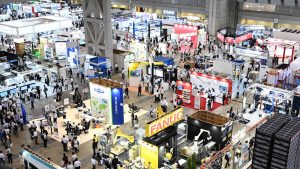
Triển lãm logistics lớn nhất châu Á này với 1.000 đơn vị triển lãm và 150.000 khách tham quan. Khách mua nước ngoài không đến để xem cho vui, họ không còn bàn về việc "nhập khẩu thiết bị" nữa mà mong muốn đưa toàn bộ giải pháp về quốc gia của mình.
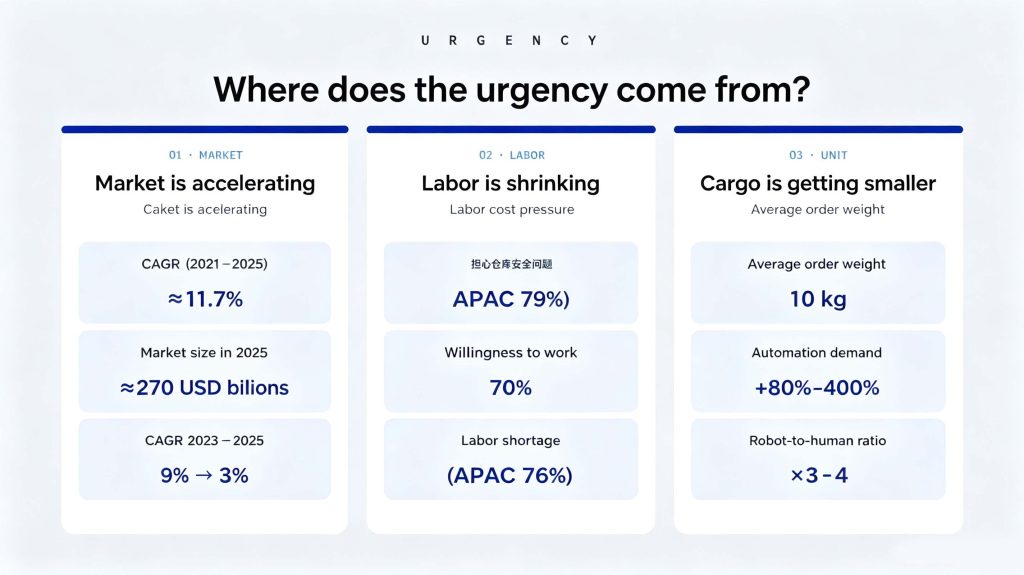
Sự cấp bách của tự động hóa kho bãi toàn cầu đến từ đâu? Ba sự thay đổi đang diễn ra cùng lúc.
Thị trường đang tăng tốc: Không phải là có làm hay không, mà là chậm chân sẽ bị tụt hậu.
Một vài con số đáng chú ý:
— Tốc độ tăng trưởng: Tốc độ tăng trưởng kép hàng năm (CAGR) của thị trường tự động hóa kho bãi toàn cầu giai đoạn 2019–2025 là khoảng 11,7%, quy mô năm 2025 khoảng 27 tỷ USD.
— Gần như gấp đôi:Theo Research and Markets, thị trường kho tự động năm 2024 khoảng 17,25 tỷ USD, dự kiến đạt 40,32 tỷ USD vào năm 2030.
— Lượng doanh nghiệp đứng ngoài quan sát giảm dần: Tỷ lệ các doanh nghiệp hoàn toàn không áp dụng tự động hóa đã giảm từ 9% năm 2023 xuống còn 3% vào năm 2025.
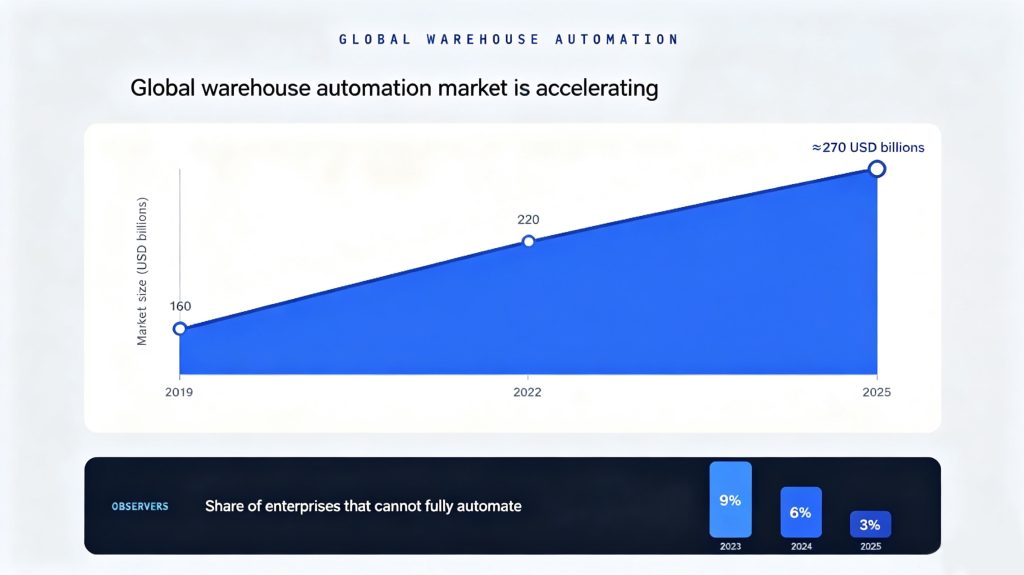
"Chỉ quan sát" đang trở thành phe thiểu số. Khi bạn nhìn rõ xu hướng, đối thủ cạnh tranh có thể đã nâng cấu trúc chi phí và tốc độ giao hàng lên một tầm cao mới.
Nhân lực đang giảm dần: "Người" trong kho ngày càng khó tìm.
Một sự cấp bách khác đến từ việc không tuyển dụng được nhân sự.
Khảo sát ngành của Zebra cho thấy: 72% quản lý kho lo lắng về vấn đề an toàn (79% tại APAC), 70% lo lắng về rủi ro tai nạn lao động, 69% lo lắng về việc thiếu chứng chỉ và làm việc quá sức (76% tại APAC).
Tại các thị trường xuất ngoại tiềm năng như Nhật Bản và Đông Nam Á, "khó tuyển, khó giữ người" không phải là biến động ngắn hạn mà là xu hướng mang tính cấu trúc. Tự động hóa không phải là "có làm hay không", mà là "dùng cách nào để lấp đầy khoảng trống nhân lực".
Hàng hóa đang nhỏ lại: Thương mại điện tử đã viết lại toàn bộ logic kho bãi.
Trước đây, kho bãi vận chuyển các pallet nặng hàng trăm kg. Nhưng thương mại điện tử đã chia nhỏ hàng hóa đơn lẻ - trọng lượng trung bình của một kiện hàng đã giảm xuống còn hơn mười kg.
Pallet đang bị thay thế bởi các thùng nhựa trong nhiều khâu, dẫn đến sự ra đời của robot thùng hàng (ACR).Khu vực đông đúc nhất tại CeMAT 2025 là robot thùng hàng: mật độ lưu trữ tăng 80% - 400%, hiệu suất nhân sự tăng 3 - 4 lần, hoàn thành cải tạo tự động hóa kho chỉ trong một tuần.
Khi độ chi tiết của hàng hóa thay đổi, công nghệ kho bãi phải thay đổi theo. Đây không phải là dự báo xu hướng, mà là thực tế đang diễn ra. Ba sức mạnh này cộng hưởng lại, sự cấp bách hiện rõ ngay trước mắt.
Cửa sổ cơ hội: Tự động hóa kho bãi Trung Quốc đang “Dẫn đầu”.
Ngoài sự cấp bách, còn có một tin tốt.
Đồng thuận tại CeMAT 2025 là: Công nghệ Logistics Trung Quốc (LogisTech) đã chuyển từ "theo sau" sang "dẫn đầu" - giành được tiếng nói quốc tế ở nhiều danh mục, từ robot thùng hàng, xe tự hành bốn chiều đến hệ thống Flying-box.
— Cải tiến nhanh nhất:Sản phẩm Trung Quốc từ R&D đến sản xuất chỉ mất 6 tháng hoặc ngắn hơn, tốc độ hiếm thấy trên toàn cầu.
— Nơi ra mắt toàn cầu: Trung Quốc đã trở thành thị trường ứng dụng công nghệ logistics lớn nhất thế giới và là nơi xuất phát để vươn ra toàn cầu.
— Lợi nhuận cao hơn: Những người tiên phong đã chứng minh: Lợi nhuận tại thị trường nước ngoài thường vượt xa trong nước.
Đối với các doanh nghiệp đang hoạch định kho bãi nước ngoài, điều này có nghĩa là: Không cần đợi "công nghệ chín muồi" — công nghệ đang ở Trung Quốc, độ chín muồi đã đủ, vấn đề thực sự cần giải quyết là "làm sao để triển khai nó một cách ổn định".
STORIN: Xu hướng là của người khác, triển khai thực tế là của chính mình.
Hiểu rõ xu hướng chỉ là bước đầu tiên. Thiết bị có đạt chứng nhận địa phương không, hệ thống có kết nối được với WMS của khách hàng không, hàng đến hiện trường có người lắp đặt không, lắp xong có người hỗ trợ vận hành không — đó mới là then chốt để biến "xu hướng" thành "lợi nhuận".
STORIN thực hiện tích hợp hệ thống kho thông minh, có trung tâm vận hành và đội ngũ địa phương tại Nhật Bản, Thái Lan, sử dụng 5 giai đoạn để kiểm soát việc bàn giao tại nước ngoài: Ký kết thống nhất → Tuân thủ & Thiết kế giải pháp → Tiền tích hợp & Mô phỏng → Lắp đặt hiệu chỉnh tại chỗ → Hỗ trợ vận hành & Bảo trì.
Khi thiết bị còn ở xưởng, rủi ro tuân thủ và logistics đã được giải tỏa trước. Bạn lo bán hàng, chúng tôi lo thiết bị triển khai ổn định.
💡 Bạn đang lập kế hoạch cho dự án tự động hóa kho bãi tại Nhật Bản hoặc Đông Nam Á?
Chào mừng bạn nhắn tin cho chúng tôi, đội ngũ STORIN có thể cung cấp cho bạn một bản đánh giá miễn phí về tính khả thi của tự động hóa kho bãi nước ngoài.
Đánh giá miễn phí tính khả thi của tự động hóa kho bãi nước ngoài
Giúp bạn nắm rõ các vấn đề tuân thủ địa phương, điều kiện hiện trường và kết nối hệ thống trong một lần.
STORIN · Nhà tích hợp hệ thống kho thông minh — Giúp việc nâng cấp kho thông minh toàn cầu và xuất ngoại trở nên đơn giản hơn!