
PROJECT BACKGROUND
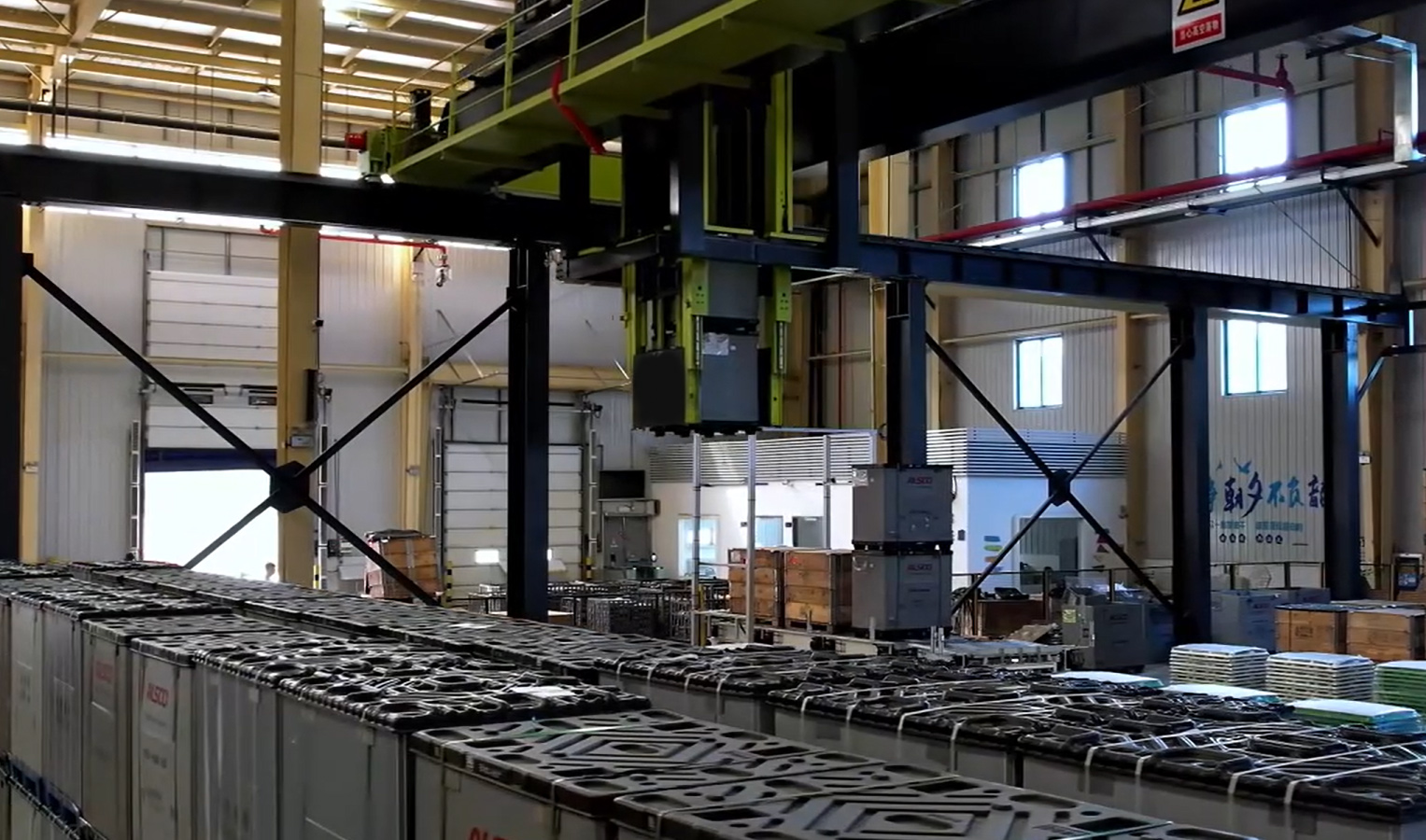
Under traditional warehousing models, manual sorting of these heavy products is not only time-consuming and labor-intensive, but also inefficient. Furthermore, forklift operations require wide aisles, and multi-level stacking is difficult, severely restricting warehousing efficiency and space utilization. To cope with the increasing business volume and improve operational efficiency, the company urgently needs to introduce innovative technologies to transform its heavy-duty warehousing management model.
3,300㎡ storage space
Conveyor line operating capacity
Cache shelf operation capabilities
Picking accuracy
Project Pain Points
Heavy Product Sorting Efficiency Bottleneck: The large weight of single pallets (over 600 kg) makes traditional manual sorting labor-intensive, inefficient, and poses safety hazards.
Insufficient Storage Space Utilization: Forklift operations require ample aisle space, resulting in low actual storage density; simultaneously, high-level stacking is difficult, limiting the effective utilization of vertical space.
High Costs and Low Efficiency: Low efficiency in both manual and equipment operation leads to persistently high overall operating costs, making it difficult to meet the company's needs for cost reduction and efficiency improvement.
Solution
Introducing Intelligent Yard Robots: Deploying an advanced yard robot system enables high-density, automated storage, handling, and sorting of heavy palletized goods.
Optimizing Stacking and Retrieval Strategies: Robots can flexibly and efficiently perform multi-level high-bay palletizing and dense storage, eliminating the need for traditional forklift aisles and significantly improving space utilization.
Unmanned Operation Mode: Replaces a large amount of manual sorting and forklift operation, reducing labor intensity and improving operational safety.
Customer Value
Significantly Increased Storage Capacity: Overall warehouse storage capacity increased by 3.5 times, effectively solving space bottlenecks and supporting the company’s large-scale goods storage needs.
Significantly Improved Inbound Efficiency: Inbound efficiency increased by 3 times, accelerating goods turnover and ensuring a smooth supply chain.
Explosive Growth in Outbound Efficiency: Outbound efficiency has achieved an astonishing 8-fold increase, significantly shortening order processing and shipping times and improving customer satisfaction.
Reduced Operating Costs and Risks: The introduction of automated systems has significantly reduced labor costs and safety risks during the handling of heavy goods, creating a safer, more efficient, and economical warehousing environment for businesses.